

Hello Friends, In this blog, I am going to tell you about one of the most dangerous viruses called Hantavirus.
However, you can not compare this virus with diseases like COVID-19 and influenza. Hantavirus has a high fatality rate and causes serious respiratory problems, which made it a global concern and news.
Actually, this is not a brand-new virus, though it has been affecting and killing people for a long time, and various healthcare…
Organizations and scientists have also investigated it to find out the reasons for its spread, deadliness, and outbreak control.
The reason why I am writing this blog now is the latest news that can amaze and scare you, too.
In 2026, this hantavirus emerged as a serious international concern when its breakout spread across many countries, and the center of this phenomenon started with a cruise ship.
It really triggered an alarm to the global health caretakers and monitors. And this incident is reminding the world about zoonotic diseases.
In zoonotic disease, the infection is spread from animals to humans. It is yet a serious public health hurdle even now.
What is Hantavirus?
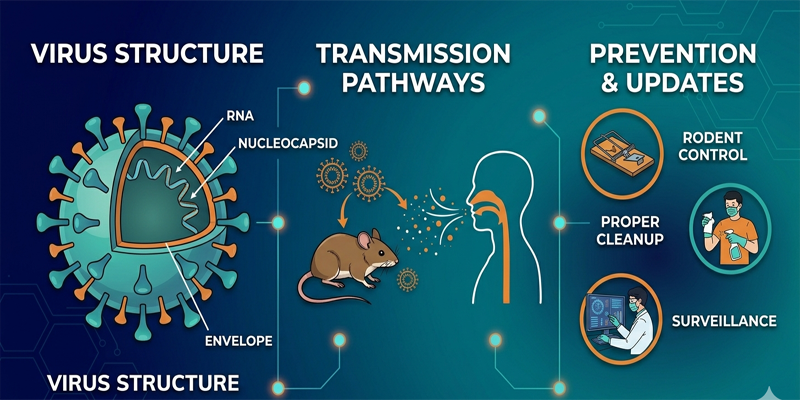
Hantavirus relates to a group of viruses that is transmitted by the hamster, such as rats and mice.
Humans only become infected when they come in contact with rodent saliva, urine, or droppings.
And this virus can also be spread through contaminated air particles during the cleaning and sweeping of distributed waste.
Hantavirus infections are categorized into two major disease forms:
1. Hantavirus Cardiopulmonary Syndrome (HCPS)
This virus type affects the lungs and heart and could be fatal in no time.
Mostly, this serious respiratory disease is found in North and South America.
2. Hemorrhagic Fever with Renal Syndrome (HFRS)
In Europe and Asia, this virus type is mainly found. Kidneys and blood vessels are the main organs that get affected by this virus form.
This virus type is extremely dangerous, as some of its strains could lead to a fatality rate up to 40-50% in a serious case.
Discovery and History of Hantavirus
This virus is given the name “Hantavirus” in honor of the Hantan, a river region in South Korea.
In the early 1950s, Korea had a war, and a massive number of soldiers got a suspicious kind of illness having fever, bleeding, and kidney failure.
Sometime later, scientists identified the responsible virus for such illness and named it after the nearby river Hantan.
Though this hantavirus took a longer time to get global recognition in 1993.
In 1993, this virus had a deadly outbreak in the Four Corners region of the USA, where Arizona, New Mexico, Colorado, and Utah connect.
Suddenly, many groups of young adults who were completely healthy started to have serious breathing problems, and many of them died in a matter of days.
However, this time a new strain, “Sin Nombre virus” was identified by the research team. It was carried by deer and mice primarily.
Ever since, a variety of hantavirus strains have been identified across Asia, Europe, and the Americas.
How Does Hantavirus Spread?
Hantavirus mainly spreads through contact with infected rodents or contaminated environments. Common transmission methods include:
- Inhaling contaminated dust particles
- Touching infected rodent urine or droppings
- Eating contaminated food
- Rodent bites (rare cases)
People working in farms, forests, warehouses, or abandoned buildings face a higher risk because they are more likely to encounter rodents.
Human-to-Human Transmission
Most hantavirus strains do not spread between humans. However, the Andes strain found in South America is a rare exception. Scientists have documented limited human-to-human transmission among close contacts and family members.
This is one reason why recent outbreaks involving the Andes virus have attracted worldwide concern.
Symptoms of Hantavirus
Symptoms generally appear between one and eight weeks after exposure. Early symptoms often resemble flu or viral fever, which makes diagnosis difficult during the initial stages.
Early Symptoms
- Fever
- Fatigue
- Muscle pain
- Headache
- Nausea
- Vomiting
- Abdominal pain
Severe Symptoms of HCPS
As the infection progresses, patients may develop:
- Coughing
- Severe breathing difficulty
- Fluid accumulation in the lungs
- Respiratory failure
- Shock
Severe Symptoms of HFRS
Patients with HFRS may experience:
- Kidney failure
- Bleeding disorders
- Low blood pressure
- Internal bleeding complications
In severe cases, the condition can worsen rapidly and become life-threatening within hours.
Diagnosis and Treatment
Diagnosing hantavirus early is difficult because its symptoms resemble many other illnesses, such as influenza, COVID-19, dengue fever, pneumonia, or leptospirosis. Doctors usually examine:
- Patient travel history
- Exposure to rodents
- Blood tests
- Antibody detection
- RT-PCR laboratory testing
Is There Any Cure?
Currently, there is no specific antiviral medicine or approved cure for hantavirus infection. Treatment mainly focuses on supportive medical care, including:
- Oxygen therapy
- Intensive care monitoring
- Fluid management
- Ventilator support
Medical experts say early hospitalization greatly improves survival chances.
Global Impact of Hantavirus
According to the World Health Organization, hantavirus infections remain relatively uncommon worldwide but continue to occur every year.
Global Statistics
- An estimated 10,000 to over 100,000 infections annually
- Asia and Europe report the highest number of cases
- Hundreds of HCPS cases occur annually in the Americas
- Fatality rates can reach up to 50% in severe respiratory infections
Countries such as China and South Korea regularly report thousands of HFRS cases every year.
Latest Hantavirus Updates in 2026
In May 2026, hantavirus again entered global headlines after a major outbreak aboard the cruise ship MV Hondius. The ship carried passengers and crew from multiple countries and became the center of international health monitoring efforts.
Key Developments
- Multiple confirmed and suspected cases were reported
- Several deaths occurred during the outbreak
- The virus involved was identified as the Andes strain
- International passenger tracing and quarantine measures were initiated
Health authorities, including the World Health Organization and European Centre for Disease Prevention and Control, confirmed that the overall public risk remained low because the virus does not spread easily like COVID-19.
Still, the outbreak highlighted the importance of:
- Rapid disease surveillance
- International coordination
- Quarantine systems
- Emergency healthcare response
The incident also sparked major online discussions and public concern across global communities.
Prevention Tips
As this disease mainly originates from the areas where rodents are found or roam around.
So our main focus should be to avoid the rodent exposure.
And make sure you don’t roam around in such an area just for fun for a long time.
Important Safety Measures
- Keep homes and workplaces clean
- Seal holes and rodent entry points
- Store food safely
- Avoid dry sweeping rodent droppings
- Use disinfectants while cleaning
- Wear gloves and masks in risky environments
Healthcare organizations have already strongly suggested that you should maintain proper hygiene and keep rodent-infested areas clean regularly.
Future Concerns and Research
As per the scientists’ predictions, zoonotic diseases like hantavirus could increase in the future as a result of urban expansion, climate change, and overexposure of humans to wildlife.
Work is going on by the researchers steadily:
- Vaccine development
- Improved testing methods
- Better outbreak monitoring systems
- International public health coordination
Currently, no globally approved vaccine exists for hantavirus infection.
There is no official or approved vaccination for hantavirus so far.
Conclusion
So, Friends, through this blog post, we have been aware of a deadly virus that could affect us if we live or work in such an ecosystem. However, Hantavirus is rarely found, but it remains one of the deadliest viral infections as it has a very high fatality rate and quick progression.
The expert says the risk for the general public is very low, though it has been constantly monitored by the world’s best health agencies, keeping an eye on any outbreaks carefully. If we want to minimise the effect of this hantavirus in the future, then we would have to spread awareness, maintain proper hygiene, control rodents, and perform regular scientific research. And this would be a strong defense against any kind of hantavirus outbreaks.
In the case of any queries, you can write to us at support@a5theory.com we will get back to you ASAP.
Hope! You would have enjoyed this post.
Please feel free to give your important feedback in the comment section below.
Have a great time!