

Introduction
Hello Friends, In this blog post(How to Learn Python), I am going to let you know about another amazing blog post on “Python”.
As most of you would be aware of this programming language, |How to Learn Python|
Python has emerged as the most famous and adaptable language across the globe in a few years.
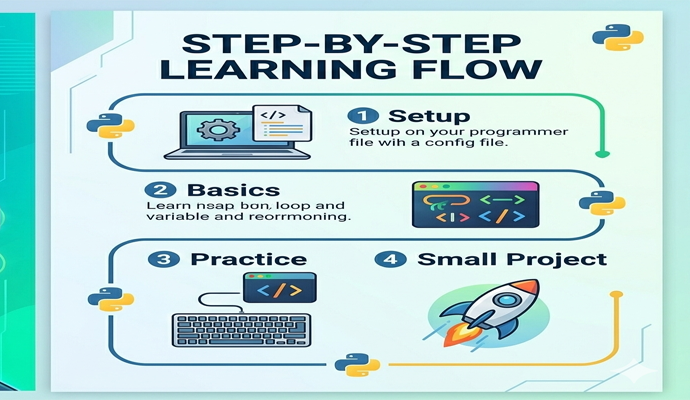
Today, almost every major technological field, like Web-Development, Automation, along with artificial intelligence, data science, etc, is using Python.
Since Python is very simple to learn, its simplicity in its syntax makes it an appropriate choice for anyone, especially for beginners who are looking to skill up in their new programming language.
But beginners often get confused about this Python language, such as where to start from, what to learn first, and how to practice this language in an efficient way.
But you don’t need to worry at all, as we are going to explain each and everything step by step so that you can easily learn this amazing Python language.
Why Learn Python?
Before diving deep, it becomes very important to understand why Python has been so fascinating amongst beginners as well as professionals.
Simple and Easy to Read
The key factor is Python syntax, which is very clean and simple and easily readable, whereas other programming languages have more complex syntax structures.
Wide Range of Applications
Python can be utilized for:
- Web development
- Automation and scripting
- Data science and analytics
- Artificial intelligence and machine learning
- Cybersecurity tools
- Software development
Large Community Support
It becomes very easy for beginners to find the tutorials, documentation, and online solutions as Python covers a vast global community.
How to Learn Python:
Step 1: Understand the Basics
If you are completely new to the Python language, then it is very important to understand the …
…fundamentals of programming, and this must be your very first step towards learning Python.
Topics You Should Start With First
- Variables and data types
- Input and output
- Conditional statements (
if,else) - Loops (
for,while) - Functions
- Lists, tuples, and dictionaries
If you learn these concepts first, they build your foundation strongly.
And before moving further to the advanced topics, you must learn these concepts.
Step 2: Install Python and Set Up Your Environment
This is what should be your next step. Install the Python Language software on your local computer.
You can download it from various websites, but I recommend downloading it from the official Python website.
Then can download a code editor which is more beginner-friendly, some of which are given below:
- VS Code
- PyCharm
- Jupyter Notebook
Having a fruitful coding ecosystem makes your learning smooth and organized properly.
Step 3: Practice by Writing Code
As you must have heard, the saying “Practice makes perfect”. This applies better to learning programming languages.
If you really want to learn Python, then you must have to write the code blocks.
Write, write, and write varieties of code regularly, then very soon you will find yourself skilled enough in the Python language.
Start with Small Programs
Start your code writing with a simple code project first. Such as
- Calculator
- Number guessing game
- To-do list application
- Basic automation scripts
With the help of this small project code, you will soon learn how the programming concepts apply in a real environment.
Step 4: Learn Problem Solving
Learning syntax alone is not enough. Strong programmers focus on problem-solving skills.
Don’t put all your focus on memorizing the syntax, but rather work on a really simple project; this will upskill your programming for sure.
Practice Coding Challenges
Nowadays, there are many websites online where you can test your programming skills, so just practice it on these available platforms:
- Logical thinking
- Algorithm understanding
- Debugging skills
First, try to solve an easy code project or code problems, then move on to a more challenging step-by-step.
Step 5: Work on Real Projects
Once you are confident enough that you can build a real-world project which will have…
… full-stack development with logical programming, then you will find it very amazing and practical.
Beginner-Friendly Project Ideas
- Personal portfolio website
- Expense tracker
- Weather application
- File organizer
- Blog management script
The more small projects you build, the more confident you will become regarding the understanding of Python.
Step 6: Learn Python Libraries and Frameworks
Python has a vast collection of libraries and frameworks.
It makes Python a very powerful platform, so learn them with their usages.
Popular Python Libraries
- NumPy for numerical computing
- Pandas for data analysis
- Matplotlib for visualization
- Flask and Django for web development
You don’t need to learn everything at once. Choose libraries based on your area of interest.
You can choose libraries as per your interest area, rather than learning all at once.
Step 7: Follow a Consistent Learning Routine
If you really want perfection in this programming language, then you must be consistent in practicing writing code every day.
Tips for Effective Learning
- Practice daily, even for 30–60 minutes
- Revise old concepts regularly
- Avoid memorizing code without understanding
- Build projects alongside theory
- Learn by experimenting
Your small but regular practice will create a big difference in long-term overall improvement.
Common Mistakes Beginners Should Avoid
Trying to Learn Everything Quickly
This is a fact that, in overexcitement, you can learn Python overnight by going through endless tutorials and videos.
So be patient, take your time, and focus on understanding the concepts one at a time.
Skipping Practice
You can never be an official and skilled programmer until you actually write the code in an editor, even if you watch several tutorials or videos on it.
Fear of Errors
Never be scared of errors or bugs; rather, try to solve or debug them.
Debugging is also an important skill for a good programmer, so learn to read and understand the error, then try to debug it.
Career Opportunities After Learning Python
If you properly learn Python, you can easily attract many career opportunities to your doorstep, such as:
- Python Developer
- Web Developer
- Data Analyst
- Machine Learning Engineer
- Automation Engineer
- Software Developer
With the growing demand for technology professionals, Python is going to remain one of the most powerful and valuable programming skills to learn.
Conclusion
So, Friends, till now in this post(How to Learn Python), we have seen the proper strategies to learn the Python language. It is very fascinating for beginners to take this best decision to learn Python and launch themselves in the world of programming with skilling this amazing technology. Python is a very simple, versatile programming language to understand and write code. Python has a very vast community support, which makes it an ideal language to learn and build applications that could help in a real-world environment.
To really be sound in Python programming skills, you must be patient and consistent enough. Practice writing code on a regular basis, always start with the basics, work on small projects first, and slowly work on your problem-solving skills. If you walk in the right direction with a proper approach, then Python could be your strong foundation towards a successful career in the software technology field.|How to Learn Python|
In the case of any queries, you can write to us at support@a5theory.com we will get back to you ASAP.
Hope! You would have enjoyed this post(How to Learn Python).
Please feel free to give your important feedback in the comment section below.
Have a great time!