

Introduction
Hello Friends, in this blog post(Commonly Confused English Words), we are going to discuss some English words that sometimes leave us in a state of confusion.
As we know, English is the international language that is being spoken across the whole world to establish communication between different communities from different countries.
Most of you would have seen or used a few English words which seems to be very confusing, as they might sound or look similar but have completely different meanings.
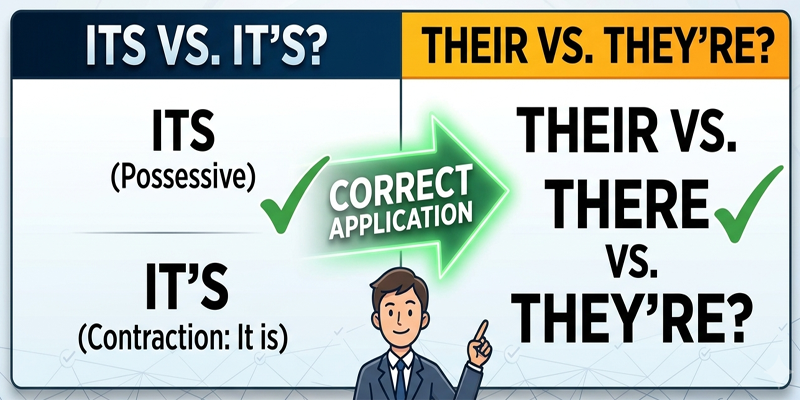
And these confusing words often cause us to make mistakes in writing, speaking, emails, exams, and daily communication.
For example, we have some words like their/there/they’re, affect/effect, accept/except, and your/you’re.
Though these words might look similar, using the wrong one could completely change the meaning of our sentence.
But you should not worry about these confusing words. You can easily avoid mistakes and choose the correct…
… word once you understand the differences between them and the contexts in which they should be used.
In this post(Commonly Confused English Words), we are going to see some of the most confused English words that often trouble you while speaking and writing.
We will also explain their meaning and examples, along with some important tips to remember these words.
Why Do People Confuse English Words?
There are several reasons why learners mix up English words:
- Similar pronunciation.
- Similar spelling.
- Similar meanings.
- Influence of their native language.
- Lack of practice using the words in context.
Understanding these reasons helps you become more aware of common mistakes.
30 Commonly Confused English Word Pairs
1. Affect vs Effect
Affect – Usually a verb meaning to influence.
Effect – Usually a noun meaning the result.
Examples
- The weather affected our trip.
- The new policy had a positive effect.
2. Accept vs Except
Accept – To receive or agree.
Except – Excluding.
Examples
- She accepted the invitation.
- Everyone came except John.
3. Your vs You’re
Your – Shows possession.
You’re – Short for you are.
Examples
- Your bag is on the chair.
- You’re doing a great job.
4. Their vs There vs They’re
Their – Belonging to them.
There – Refers to a place.
They’re – Short for they are.
Examples
- Their house is beautiful.
- Please sit over there.
- They’re my classmates.
5. Its vs It’s
Its – Possessive form.
It’s – Short for it is.
Examples
- The dog wagged its tail.
- It’s raining today.
6. Than vs Then
Than – Used in comparisons.
Then – Refers to time or sequence.
Examples
- She is taller than me.
- Finish your homework, then watch TV.
7. Lose vs Loose
Lose – To misplace or fail to win.
Loose – Not tight.
Examples
- Don’t lose your keys.
- My shirt is too loose.
8. Advice vs Advise
Advice – A noun.
Advise – A verb.
Examples
- Thank you for your advice.
- I advise you to study daily.
9. Principal vs Principle
Principal – Head of a school or most important.
Principle – A rule or belief.
Examples
- The principal welcomed the students.
- Honesty is an important principle.
10. Compliment vs Complement
Compliment – Praise.
Complement – Complete or enhance.
Examples
- She gave me a compliment.
- This tie complements your suit.
11. Stationary vs Stationery
- Stationary – Not moving.
- Stationery – Writing materials.
12. Desert vs Dessert
- Desert – Dry land.
- Dessert – Sweet dish after a meal.
13. Weather vs Whether
- Weather – Climate.
- Whether – Expresses a choice.
14. Peace vs Piece
- Peace – Calm.
- Piece – A part of something.
15. Borrow vs Lend
- Borrow – Receive temporarily.
- Lend – Give temporarily.
16. Farther vs Further
- Farther – Physical distance.
- Further – Additional or figurative distance.
17. Historic vs Historical
- Historic – Important in history.
- Historical – Related to history.
18. Elicit vs Illicit
- Elicit – Draw out information.
- Illicit – Illegal.
19. Lay vs Lie
- Lay – Put something down.
- Lie – Recline.
20. Passed vs Past
- Passed – Past tense of pass.
- Past – Refers to a previous time.
21–30 (Quick Reference)
| Word Pair | Difference |
|---|---|
| Hear / Here | Listen / Place |
| Break / Brake | Damage / Stop a vehicle |
| Capital / Capitol | City or money / Government building |
| Cite / Site | Quote / Location |
| Council / Counsel | Group / Advice |
| Device / Devise | Object / Create |
| Emigrate / Immigrate | Leave a country / Enter a country |
| Quiet / Quite | Silent / Very |
| Role / Roll | Position / Turn over |
| Allusion / Illusion | Indirect reference / False impression |
Quick Tips to Remember the Differences
- Learn words in sentences, not in isolation.
- Read English newspapers and books regularly.
- Keep a vocabulary notebook.
- Revise commonly confused pairs every week.
- Use flashcards for difficult words.
- Practice writing your own examples.
Common Mistakes to Avoid
❌ Using your instead of you’re.
❌ Confusing their, there, and they’re.
❌ Writing it’s when you mean its.
❌ Mixing up advice and advise.
❌ Using effect when you need the verb affect.
Practice Exercise
Choose the correct word:
- ______ going to enjoy the movie. (Your / You’re)
- The medicine had a positive ______. (Affect / Effect)
- Please keep ______ books on the table. (Their / There)
- Could you ______ me some money? (Borrow / Lend)
- I need your ______. (Advice / Advise)
Answers
- You’re
- Effect
- Their
- Lend
- Advice
Frequently Asked Questions
Why are these words so confusing?
Many English words have similar spellings or pronunciations but different meanings, making them easy to mix up without regular practice.
How can I remember the correct usage?
Read often, write example sentences, review vocabulary regularly, and focus on learning words in context rather than memorizing definitions alone.
Are these mistakes common among native speakers?
Yes. Even native speakers sometimes confuse words such as your/you’re and their/there/they’re, especially in informal writing.
Key Takeaways
- Learn confusing words in context.
- Practice with real sentences.
- Review commonly mixed-up pairs regularly.
- Pay attention to grammar and meaning.
- Build a personal list of words you frequently confuse.
Conclusion
Friends, in this post(Commonly Confused English Words), we have seen some confused English words with their meanings and examples. It is very common to find similar words in English and have trouble using them correctly. But if you practice such words regularly, having known their meanings and examples, soon you will be able to have a good command over them. It will definitely improve your spoken as well as written English.
One thing you should remember: don’t try to memorise all the confused words at once. First, put your focus on a few useful and common confused words and practice them regularly in your sentences. Once you get a good command of them, then gradually learn a few more, and don’t forget to practice recent and old ones. Soon you won’t find such confusion while choosing the words out of these confused words, as you will be doing it naturally. |Commonly Confused English Words|
If you have any queries, you can write to us at support@a5theory.com; we will get back to you ASAP.
Hope! You would have enjoyed this post(Commonly Confused English Words).
Please feel free to give your important feedback in the comment section below.
Have a great time!