

Introduction
Hello Friends, in this blog post(English Learning Roadmap), we are going to share a useful and important roadmap for learning English properly and achieving mastery.
It could be an overwhelming experience to learn English as it covers various amazing topics like grammar, vocabulary, speaking, listening, writing, pronunciation, and more.
Most learners either pick any random topic and start learning it, or they frequently jump from one topic to another very quickly.
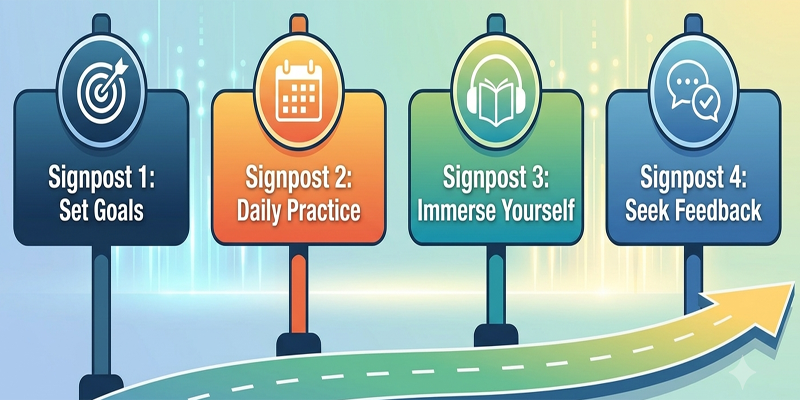
By learning this way, their learning process often remains slow, or they just get confused in between during the learning process.
Remember one thing: you don’t need to learn full English concepts at once. Instead, you should follow a clear roadmap and should have consistent practice.
If you want to build everlasting confidence in English, then you must go and improve it step by step.
In this blog(English Learning Roadmap), we will teach you this amazing roadmap to learn English in the right direction of all the necessary English skills.
If you follow this properly with regular consistency, then nothing can stop you from being a confident communicator and fluent speaker. |English Learning Roadmap|
Why You Need a Learning Roadmap
A structured roadmap helps you:
- Stay focused on the right topics.
- Track your progress.
- Avoid skipping important fundamentals.
- Build skills gradually.
- Stay motivated with clear goals.
Learning English is a journey, and a roadmap keeps you moving in the right direction.
Step 1 – Build Grammar Basics
Grammar forms the foundation of the English language.
Start by learning:
- Parts of Speech
- Articles
- Tenses
- Subject-Verb Agreement
- Active and Passive Voice
- Direct and Indirect Speech
- Modals
- Prepositions
- Conjunctions
- Sentence Types
Recommended Reading
- Parts of Speech
- English Tenses Explained
- Active and Passive Voice
- Direct and Indirect Speech
- Subject-Verb Agreement
- Sentence Structure in English Grammar
Step 2 – Expand Your Vocabulary
Vocabulary allows you to express your ideas more clearly.
Focus on:
- Daily-use words
- Synonyms and antonyms
- Phrasal verbs
- Idioms
- Collocations
- Business vocabulary
Learn 5–10 new words every day and use them in your own sentences.
Recommended Reading
- 500 Daily Use English Words
- English Vocabulary Building
- Commonly Confused English Words
- English Idioms and Phrases
Step 3 – Learn Sentence Structure
Once you know grammar and vocabulary, learn how to combine them into meaningful sentences.
Practice:
- Simple sentences
- Compound sentences
- Complex sentences
- Questions
- Negative sentences
Strong sentence structure improves both speaking and writing.
Recommended Reading
- Sentence Structure in English Grammar
- Write Better English Sentences
Step 4 – Improve Reading Skills
Reading introduces you to natural English.
Read:
- Blogs
- Newspapers
- Storybooks
- Short articles
- Biographies
While reading:
- Highlight unfamiliar words.
- Guess meanings from context.
- Review new vocabulary regularly.
Reading also strengthens grammar and writing skills.
Step 5 – Improve Listening Skills
Listening helps you understand pronunciation, rhythm, and natural conversations.
Practice by listening to:
- Podcasts
- News
- Audiobooks
- Interviews
- Educational videos
Listen actively rather than passively. Replay difficult sections and repeat what you hear.
Recommended Reading
- How to Improve English Listening Skills
- English Pronunciation Tips
Step 6 – Practice Speaking Daily
Speaking is the skill that requires the most regular practice.
Daily activities include:
- Reading aloud
- Shadowing
- Mirror practice
- Self-introduction
- Storytelling
- Role-playing
- Recording your voice
Don’t wait until your grammar is perfect before speaking.
Recommended Reading
- English Speaking Practice for Beginners
- How to Improve Spoken English Fluently
- English Conversation Skills
Step 7 – Improve Writing Skills
Writing strengthens grammar, vocabulary, and sentence formation.
Practice writing:
- Daily journals
- Emails
- Short essays
- Social media posts
- Blog comments
Always proofread your work before sharing it.
Recommended Reading
- Email Writing in English
- Write Better English Sentences
- Punctuation Rules in English Writing
Step 8 – Learn Professional English
If you plan to study abroad or work in an office, professional English is essential.
Learn:
- Business emails
- Interview communication
- Customer service English
- Workplace vocabulary
- Meeting etiquette
Recommended Reading
- Business English for Beginners
- Interview Questions in English
- English for Customer Service and Business Communication
Step 9 – Think in English
One of the biggest obstacles to fluency is translating from your native language.
Instead of translating, start thinking directly in English.
Example:
Instead of mentally translating “मैं बाजार जा रहा हूँ,” think:
I am going to the market.
This habit increases speaking speed and confidence.
Recommended Reading
- How to Think in English Without Translating
Step 10 – Practice Every Day
Consistency matters more than intensity.
A Simple Daily Routine
Morning (15 Minutes)
- Learn five new words.
- Read one short article.
Afternoon (15 Minutes)
- Practice grammar exercises.
- Write five sentences.
Evening (20 Minutes)
- Listen to an English podcast.
- Practice shadowing.
Night (10 Minutes)
- Speak about your day in English.
- Review the new words you learned.
A routine builds long-term progress.
Common Mistakes to Avoid
Avoid these habits:
❌ Waiting to become perfect before speaking.
❌ Memorizing grammar rules without practice.
❌ Ignoring pronunciation.
❌ Learning vocabulary without using it.
❌ Studying irregularly.
❌ Translating every sentence.
Small daily efforts produce better results than occasional long study sessions.
Frequently Asked Questions
How long does it take to become fluent in English?
The timeline varies depending on your current level, study routine, and opportunities to practice. With regular daily practice, many learners see steady improvement over several months, while achieving advanced fluency may take longer.
Should I focus on grammar or speaking first?
Build a basic understanding of grammar, but start speaking as early as possible. Learning grammar and practicing speaking together leads to better long-term results.
Can I learn English without joining a coaching institute?
Yes. With quality learning resources, consistent practice, reading, listening, speaking, and writing every day, many learners successfully improve their English independently.
Key Takeaways
- Learn English step by step instead of trying to master everything at once.
- Build a strong foundation in grammar and vocabulary.
- Practice reading, listening, speaking, and writing regularly.
- Use English in everyday situations to gain confidence.
- Follow a consistent study routine and review your progress frequently.
Conclusion
Friends, in this blog post(English Learning Roadmap), we have seen an amazing roadmap to learn the English language properly in the right direction or order. English learning journey requires practice, patience, and consistency. Never go for shortcuts, as they are not going to work in the end. Always put your focus on developing one skill at a time, make a proper routine, and maintain it. If you really want to be a confident English user, then Grammar, vocabulary, listening, speaking, reading, and writing all work together to help you achieve this.
It is a fact that English fluency is not going to come overnight. It is built up with each day’s small efforts of improvement. You just follow the roadmap described in the blog above and practice it regularly. Always try to find new conversation opportunities, books, and writing exercises. Soon you will start to experience a great improvement in your overall English skills. For every aspect of English communication, you will feel confident. |English Learning Roadmap|
If you have any queries, you can write to us at support@a5theory.com; we will get back to you ASAP.
Hope! You would have enjoyed this post(English Learning Roadmap).
Please feel free to give your important feedback in the comment section below.
Have a great time!