

Introduction
Hello Friends, in this blog post(English Pronunciation Tips), we are going to let you know about a few amazing tips for making your English pronunciation better.
Most of you would have faced this problem when you speak something in English, and then you are asked to repeat your sentence once again.
So is it your grammar problem or vocabulary problem?
I guess not! In most of the cases, it is our pronunciation problem.
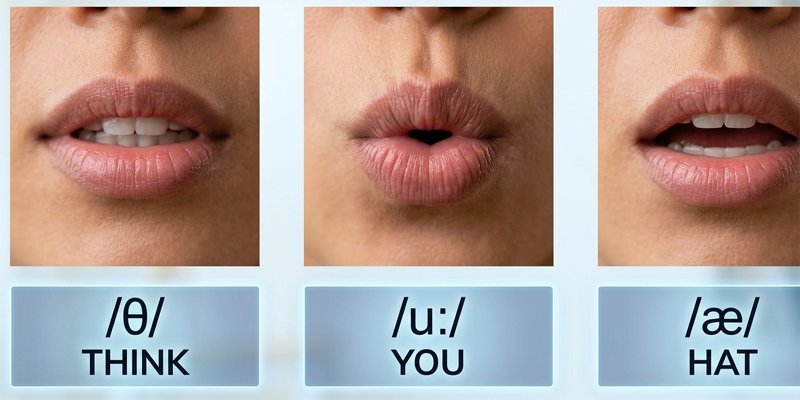
If you have good pronunciation, then others can easily understand you, as your communication is very natural with correct pronunciation.
You should not put huge pressure on yourself to be like a native speaker one hundred percent. Instead, you should focus on accurate, clear, and confident speech.
Please consider pronunciation as a new skill and practice it consistently until you get full command of it.
If you want to be an effective English speaker, then you have to learn a few important things while speaking, like word stress, correct sounds, rhythm, and intonation.
In this post(English Pronunciation Tips), we are going to teach you some amazing pronunciation tips, along with some common mistakes that beginners often make.
We will also explore daily exercises helping to improve your spoken English. |English Pronunciation Tips|
Why Pronunciation Matters
Clear pronunciation helps you:
- Communicate your ideas effectively.
- Build confidence while speaking.
- Improve listening comprehension.
- Avoid misunderstandings.
- Perform better in interviews, presentations, and meetings.
- Sound more natural in conversations.
Remember, clear communication is more important than having a foreign or native-like accent.
Pronunciation vs Accent
Many learners confuse these two terms.
Pronunciation
Pronunciation is the way you correctly produce the sounds of words.
Accent
An accent reflects the influence of your native language or region on your speech.
Having an accent is perfectly normal. The goal is not to eliminate your accent but to ensure that your pronunciation is clear and understandable.
Common Pronunciation Mistakes
Here are some mistakes learners often make:
1. Mispronouncing Silent Letters
Examples:
- Knife → the k is silent.
- Honest → the h is silent.
- Write → the w is silent.
- Debt → the b is silent.
2. Incorrect Word Stress
Some words change meaning or sound unnatural when stressed incorrectly.
Examples:
- PREsent (noun)
- preSENT (verb)
Practice stressing the correct syllable.
3. Pronouncing Every Letter
English spelling and pronunciation don’t always match.
Examples:
- Wednesday → Wenz-day
- Comfortable → Comf-tur-bul
- Chocolate → Chok-lit (common spoken form)
Listening to native or proficient speakers helps you learn natural pronunciation.
10 Practical Pronunciation Tips
1. Listen Carefully Before Speaking
Pay attention to how fluent speakers pronounce words.
Use podcasts, interviews, or educational videos.
2. Speak Slowly
Don’t rush.
Speaking slowly helps you pronounce words more accurately and confidently.
3. Practice Shadowing
Shadowing means repeating exactly what a speaker says immediately after hearing it.
This improves:
- Pronunciation
- Rhythm
- Intonation
- Fluency
Practice with short audio clips for 10–15 minutes daily.
4. Learn the Sounds, Not Just the Spelling
English words are not always pronounced as they are written.
For example:
- Enough
- Though
- Through
- Thought
These words contain similar letters but different sounds.
5. Record Your Voice
Read a paragraph aloud and record yourself.
Then compare your pronunciation with that of a fluent speaker.
This helps you identify areas that need improvement.
6. Learn Word Stress
Every English word has a stressed syllable.
Examples:
- TAble
- WINdow
- BEAUtiful
- imPORtant
Correct stress makes your speech sound more natural.
7. Practice Sentence Stress
In spoken English, important words receive more emphasis.
Example:
“I need this report by tomorrow.”
Content words are stressed more than function words.
8. Use Online Dictionaries with Audio
Whenever you learn a new word:
- Listen to its pronunciation.
- Repeat it several times.
- Use it in a sentence.
This builds correct pronunciation from the beginning.
9. Read Aloud Every Day
Reading aloud improves:
- Pronunciation
- Fluency
- Confidence
- Speaking speed
Even 15 minutes daily can make a noticeable difference.
10. Practice Minimal Pairs
Minimal pairs are words that differ by only one sound.
Examples:
- Ship / Sheep
- Bit / Beat
- Fan / Van
- Light / Right
- Bat / Bad
Practicing these pairs helps you distinguish similar sounds.
Understanding Stress, Rhythm, and Intonation
Word Stress
One syllable is emphasized more than the others.
Example:
- comPUter
- aBOUT
- toMORrow
Sentence Rhythm
English has a natural rhythm where important words are stressed.
Example:
“I finished my project yesterday.”
Intonation
Intonation is the rise and fall of your voice.
Rising Intonation
Used in many yes/no questions.
“Are you coming?”
Falling Intonation
Used in statements and WH-questions.
“What time is the meeting?”
Natural intonation makes your speech sound more engaging.
Silent Letters You Should Know
| Word | Silent Letter |
|---|---|
| Knife | K |
| Write | W |
| Honest | H |
| Debt | B |
| Castle | T |
| Listen | T |
| Lamb | B |
| Thumb | B |
| Psychology | P |
| Half | L |
Learning these common patterns will improve both pronunciation and listening.
Daily Pronunciation Practice Routine
Morning (10 Minutes)**
Read an English article aloud.
Afternoon (10 Minutes)**
Practice five new words with audio pronunciation.
Evening (15 Minutes)**
Watch an English video and repeat sentences using the shadowing technique.
Night (10 Minutes)**
Record yourself reading a short paragraph and compare it with a native or proficient speaker.
Useful Resources
To improve pronunciation, explore:
- Online dictionaries with audio pronunciation.
- English learning podcasts.
- YouTube channels focused on pronunciation.
- Audiobooks with accompanying text.
- Speech recognition features on language-learning apps.
Choose one or two reliable resources and practice consistently rather than switching between too many.
Common Mistakes to Avoid
❌ Speaking too quickly.
❌ Ignoring word stress.
❌ Pronouncing every letter.
❌ Depending only on spelling.
❌ Avoiding speaking because you’re afraid of mistakes.
❌ Trying to copy an accent instead of focusing on clarity.
Practice Exercises
Exercise 1
Read the following words aloud:
- Comfortable
- February
- Vegetable
- Opportunity
- Environment
Listen to the correct pronunciation first, then repeat.
Exercise 2
Practice these minimal pairs:
- Ship / Sheep
- Fan / Van
- Light / Right
- Cap / Cup
- Live / Leave
Exercise 3
Record yourself reading a short English paragraph.
Listen to your recording and note:
- Mispronounced words
- Word stress
- Speaking speed
- Clarity
Exercise 4
Choose a one-minute English speech or podcast and practice shadowing it every day for one week.
Frequently Asked Questions
Do I need a native accent to speak good English?
No. Clear pronunciation is much more important than sounding like a native speaker. Your goal should be to communicate effectively.
How long does it take to improve pronunciation?
With consistent daily practice, many learners notice improvement within a few months. Progress depends on regular listening and speaking.
Should I practice pronunciation every day?
Yes. Even 10–15 minutes of focused daily practice can significantly improve your pronunciation over time.
Key Takeaways
- Focus on clarity, not accent.
- Learn correct pronunciation from reliable audio sources.
- Practice shadowing regularly.
- Pay attention to word stress and sentence rhythm.
- Record yourself to identify areas for improvement.
- Read aloud every day to build confidence.
Conclusion
Friends, in this post(English Pronunciation Tips), we have learned a few amazing pronunciation tips and techniques. If you want to speak very impressive and effective English, then your pronunciation must be clear and next-level. Others can easily understand you, and it boosts your confidence by making your spoken English more natural.
Successful English communication is not when you speak exactly like a native English speaker. Instead, you should practice the useful techniques described in the post above, such as reading aloud, learning word stress, recording yourself, and shadowing. If you practice them regularly with full consistency, then gradually you will become a confident and effective English speaker. |English Pronunciation Tips|
If you have any queries, you can write to us at support@a5theory.com; we will get back to you ASAP.
Hope! You would have enjoyed this post(English Pronunciation Tips).
Please feel free to give your important feedback in the comment section below.
Have a great time!